
Emergency Lighting Systems: Your Complete Guide to Safety and Compliance

Table of Contents

  1. Understanding Emergency Lighting Systems
  2. The High Cost of Emergency Lighting Failures
  3. Common Emergency Lighting Challenges
  4. Types of Emergency Lighting Solutions
  5. Resco’s Comprehensive Emergency Lighting Solutions
  6. Installation and Maintenance Best Practices
  7. Choosing the Right System for Your Facility
  8. Conclusion
  9. Frequently Asked Questions

Understanding Emergency Lighting Systems

When the lights go out unexpectedly, panic can set in within seconds. Emergency lighting systems serve as critical safety infrastructure that activates automatically during power failures, providing illumination for safe evacuation and continued essential operations. These systems encompass emergency exit lights, pathway illumination, and backup power solutions that can mean the difference between orderly evacuation and dangerous chaos.

Building codes across various jurisdictions mandate specific emergency lighting requirements, yet many facilities struggle with outdated, unreliable systems that fail when needed most. Understanding the components and requirements of modern emergency lighting systems is essential for facility managers, building owners, and safety professionals who bear the responsibility of protecting occupants.

The High Cost of Emergency Lighting Failures

Emergency lighting failures create significant risks and costs that extend far beyond the initial inconvenience of lost power. When emergency exit lights malfunction or emergency lighting systems fail during critical moments, the consequences can be severe and costly.

Property owners face substantial legal liability when inadequate emergency lighting contributes to injuries during evacuations. Insurance claims, lawsuits, and regulatory fines can reach hundreds of thousands of dollars. In 2023, workplace injury settlements related to inadequate emergency lighting averaged $2.3 million per incident, according to industry safety reports.

Beyond financial implications, failed emergency lighting systems put human lives at risk. During power outages, occupants rely entirely on emergency illumination to navigate unfamiliar exit routes, especially in large commercial buildings, hospitals, schools, and industrial facilities. Without proper lighting, evacuation times increase dramatically, and the risk of accidents multiplies.

Regulatory compliance violations add another layer of cost. Fire marshals and building inspectors regularly cite facilities for non-functional emergency lighting, resulting in costly upgrades, operational shutdowns, and ongoing monitoring requirements. These citations often trigger comprehensive facility audits that uncover additional compliance issues.

Common Emergency Lighting Challenges

Facility managers encounter numerous challenges when maintaining effective emergency lighting systems. Battery degradation ranks among the most common issues, as traditional emergency lighting batteries lose capacity over time and often fail without warning. Many facilities discover battery failures only during monthly testing or, worse, during actual emergencies.

Inadequate coverage presents another significant challenge. Emergency exit lights installed years ago may no longer meet current code requirements as building layouts change or occupancy levels increase. Renovations, new equipment installations, and changing furniture arrangements can create dark zones where emergency lighting fails to provide adequate illumination.

Maintenance complexity compounds these problems. Traditional emergency lighting systems require regular battery replacements, bulb changes, and individual unit testing. This maintenance burden strains facility resources and creates opportunities for oversight. Many facilities struggle to maintain accurate testing records and replacement schedules.

Technology obsolescence creates additional headaches. Older emergency lighting systems use outdated components that become difficult to source. When units fail, finding compatible replacement parts becomes expensive and time-consuming, often requiring complete system upgrades.

Environmental factors also impact system reliability. Temperature extremes, humidity, dust, and vibration can accelerate component failure in emergency lighting systems. Industrial facilities, parking garages, and outdoor installations face particularly challenging conditions that standard equipment cannot handle reliably.

Types of Emergency Lighting Solutions

Modern emergency lighting systems offer various configurations to meet different facility needs and regulatory requirements. Self-contained emergency exit lights represent the most basic solution, with individual battery backup units mounted at exit doors and along egress paths. These units provide localized lighting but require extensive maintenance and testing.

Central battery systems offer improved efficiency and maintenance advantages by powering multiple emergency lights from centralized battery banks. These systems reduce individual unit maintenance while providing better monitoring capabilities and longer runtime options.

Maintained emergency lighting systems operate continuously, switching to battery power during outages. Non-maintained systems activate only during power failures, conserving battery life but requiring separate normal lighting circuits.

LED emergency lighting has revolutionized the industry with superior energy efficiency, longer service life, and reduced maintenance requirements. LED emergency exit lights typically last 10-15 years compared to 2-3 years for traditional incandescent units.

Addressable emergency lighting systems provide sophisticated monitoring and control capabilities, allowing facility managers to remotely monitor system status, battery condition, and lamp functionality. These systems generate detailed reports and automated alerts for maintenance needs.

Resco’s Comprehensive Emergency Lighting Solutions

Resco addresses emergency lighting challenges through innovative products and comprehensive support services designed to ensure reliable performance and regulatory compliance. Our emergency lighting system portfolio includes advanced LED technology, intelligent monitoring capabilities, and robust construction for demanding environments.

Our emergency exit lights feature long-life LED arrays with 10-year warranties and self-diagnostic capabilities that continuously monitor battery condition and lamp functionality. These units provide clear exit marking with high-contrast graphics and uniform illumination patterns that meet or exceed current building code requirements.

Resco’s central battery systems deliver exceptional reliability through redundant power sources, advanced battery management, and comprehensive monitoring capabilities. These systems support facilities ranging from small commercial buildings to large industrial complexes, with runtime options from 90 minutes to 24 hours.

Our technical expertise extends beyond product supply to include comprehensive facility assessments, custom system design, and ongoing support services. Resco engineers work with facility managers to evaluate existing systems, identify improvement opportunities, and develop cost-effective upgrade strategies that ensure compliance and enhance safety.

Installation support includes detailed specifications, mounting guidance, and commissioning assistance to ensure proper system operation from day one. Our factory-trained technicians provide on-site support for complex installations and system integration projects.

Maintenance programs help facilities maintain optimal system performance through scheduled inspections, battery replacement services, and documentation support. These programs reduce facility management burden while ensuring consistent compliance with testing and maintenance requirements.

Installation and Maintenance Best Practices

Proper installation forms the foundation of reliable emergency lighting system performance. Emergency exit lights require careful positioning to provide adequate illumination levels at floor level along egress paths. Mounting height, beam patterns, and surrounding obstructions all impact lighting effectiveness.

Circuit design considerations include dedicated emergency lighting circuits, proper wire sizing, and appropriate overcurrent protection. Emergency lighting systems must remain isolated from normal lighting circuits to prevent inadvertent disconnection during maintenance activities.

Battery maintenance schedules should include monthly functional testing, annual discharge testing, and periodic replacement based on manufacturer recommendations. LED emergency lighting systems typically require battery replacement every 4-6 years, while older systems may need annual battery changes.

Documentation requirements include installation records, testing logs, and maintenance schedules. Many jurisdictions require monthly testing documentation and annual performance reports. Digital record-keeping systems help facilities maintain accurate documentation and identify maintenance trends.

Environmental considerations impact installation locations and equipment selection. Temperature extremes, moisture, dust, and chemical exposure require specialized equipment ratings and protective measures. Outdoor emergency lighting installations need weatherproof enclosures and appropriate ingress protection ratings.

Choosing the Right System for Your Facility

Facility size and occupancy levels drive emergency lighting system requirements. Small commercial buildings may function adequately with self-contained emergency exit lights, while large facilities benefit from central battery systems and addressable monitoring capabilities.

Budget considerations include initial equipment costs, installation expenses, and ongoing maintenance requirements. While LED emergency lighting systems require higher initial investment, they deliver substantial long-term savings through reduced maintenance and energy consumption.

Regulatory requirements vary by jurisdiction and occupancy type. Healthcare facilities, schools, and high-rise buildings face more stringent requirements than typical commercial buildings. Working with experienced emergency lighting professionals ensures compliance with applicable codes and standards.

Future expansion plans should influence system selection. Facilities planning renovations or expansions benefit from scalable emergency lighting solutions that accommodate changing requirements without complete system replacement.

Maintenance capabilities within your organization impact system selection. Facilities with limited maintenance staff benefit from low-maintenance LED systems and remote monitoring capabilities that reduce hands-on testing requirements.

Conclusion

Emergency lighting systems represent critical safety infrastructure that protects building occupants during power outages and emergency situations. The consequences of system failures extend far beyond inconvenience, creating legal liability, regulatory compliance issues, and most importantly, risks to human safety.

Modern emergency lighting solutions address traditional challenges through advanced LED technology, intelligent monitoring systems, and comprehensive support services. Resco’s emergency lighting systems provide reliable performance, simplified maintenance, and long-term cost savings while ensuring regulatory compliance.

Investing in quality emergency lighting systems protects your facility, your occupants, and your organization from the significant risks and costs associated with inadequate emergency illumination. The peace of mind that comes from knowing your emergency lighting will perform when needed makes this investment invaluable.

Contact Resco today to schedule a comprehensive emergency lighting assessment and discover how our solutions can enhance safety and compliance in your facility.

Frequently Asked Questions

Q: How often should emergency lighting systems be tested? A: Most building codes require monthly functional testing and annual full-discharge testing. LED emergency lighting systems may have different testing requirements, so consult local regulations and manufacturer recommendations.

Q: What is the difference between maintained and non-maintained emergency lighting? A: Maintained emergency lighting operates continuously, switching to battery power during outages. Non-maintained systems activate only during power failures, which conserves battery life but requires separate normal lighting circuits.

Q: How long do emergency lighting batteries typically last? A: Battery life varies by type and application. LED emergency lighting batteries typically last 4-6 years, while traditional systems may require annual replacement. Environmental conditions and usage patterns significantly impact battery life.

Q: Are there different requirements for different types of buildings? A: Yes, building codes specify different emergency lighting requirements based on occupancy type, building height, and occupant load. Healthcare facilities, schools, and high-rise buildings typically have more stringent requirements.

Q: What are the benefits of LED emergency lighting compared to traditional systems? A: LED emergency lighting offers longer service life, reduced maintenance, better energy efficiency, and improved reliability. LED systems typically provide 10-year warranties compared to 2-3 years for traditional incandescent systems.

Q: Can existing emergency lighting systems be upgraded without complete replacement? A: Many existing systems can be upgraded with LED retrofit kits or by replacing individual components. However, older systems may require complete replacement to meet current code requirements and achieve optimal performance.

Q: What documentation is required for emergency lighting systems? A: Most jurisdictions require installation records, monthly testing logs, annual performance reports, and maintenance documentation. Digital record-keeping systems help maintain accurate documentation and simplify compliance reporting.

 Complete Guide to Exit Lights: Enhancing Safety and Compliance

Today, we’re diving into the essential world of exit lights—the often-underappreciated guardians of safety in buildings. Understanding exit lights is crucial because they’re designed to guide you to safety during emergencies like fires or power outages.

In this guide, we’ll explore why exit lights are indispensable, their installation regulations, the different types available, and why modern LED exit lights are increasingly favoured over traditional options.

Whether you’re a building owner, manager, or simply curious about building safety, knowing about exit lights ensures you’re prepared to navigate emergencies effectively.

Let’s embark on this journey to uncover the importance and nuances of exit lights in ensuring safety and compliance in buildings.

Table of Contents

  1. Introduction
  2. Why Exit Lights Are Essential?
  3. Building Codes on Emergency Exit Lights
  4. Exit Sign Requirements
  5. Types of Exit Lights
  6. Advantages of Using LED Exit Lights Compared to Fluorescent or Incandescent Ones
  7. FAQs about Exit Lights
  8. Conclusion

Why Exit Lights Are Essential?

Exit lights serve a critical role in buildings by providing clear guidance to occupants during emergencies. Here’s why they are essential:

  • Emergency Navigation: During fires, power failures, or other crises, exit lights help occupants find and navigate toward exits swiftly and safely.
  • Visibility in Darkness: They remain illuminated even in darkness or smoke, ensuring visibility is maintained along evacuation routes.
  • Regulatory Compliance: Building codes mandate their installation to meet safety standards and facilitate orderly evacuations.

Understanding their importance underscores their role beyond mere illumination—they are lifelines during emergencies.

Building Codes on Emergency Exit Lights

Building codes and regulations set forth strict guidelines for emergency exit lights to ensure consistent safety standards across buildings.

These codes, such as NFPA 101 and the International Building Code, specify requirements for:

  • Installation: Proper placement of exit lights to ensure clear visibility and directional guidance.
  • Illumination Levels: Minimum brightness standards to ensure visibility during emergencies.
  • -Testing and Maintenance: Regular testing schedules and maintenance procedures to ensure operational readiness.

Compliance with these codes is crucial for building owners and managers to ensure occupant safety and regulatory adherence.

 Exit Sign Requirements

Exit signs must meet specific criteria to effectively guide occupants to safety:

  • Visibility: Signs must be clearly visible in both normal and emergency lighting conditions.
  • Illumination: They should remain lit during power outages to maintain visibility.
  • Placement: Strategically placed along exit routes to provide continuous guidance.

Meeting these requirements ensures that exit signs fulfill their intended purpose of directing people safely out of buildings during emergencies.

Types of Exit Lights

There are several types of exit lights available to suit different building layouts and needs:

  1. Traditional Exit Signs: Typically use incandescent or fluorescent bulbs, providing reliable illumination.
  2. LED Exit Signs: Known for their energy efficiency, longevity, and brightness, LED signs are becoming increasingly popular.
  3. Photoluminescent Exit Signs: Absorb ambient light and glow in the dark, serving as reliable backup signage during power outages.

Choosing the right type depends on energy efficiency goals, maintenance preferences, and aesthetic considerations.

Advantages of Using LED Exit Lights Compared to Fluorescent or Incandescent Ones

LED exit lights offer several advantages over traditional options:

  • Energy Efficiency: They consume less energy, resulting in lower operational costs.
  • Longevity: LEDs have a longer lifespan, reducing maintenance and replacement frequency.
  • Brightness and Visibility: They provide bright and clear illumination, enhancing visibility during emergencies.
  • Durability: LEDs are durable and resistant to shocks and vibrations compared to fragile fluorescent tubes or incandescent bulbs.


These benefits make LED exit lights a preferred choice for modern buildings aiming to enhance safety while reducing energy consumption and maintenance costs.


FAQs about Exit Lights

Q: How often should exit lights be tested?**

A: Exit lights should be tested monthly to ensure they are functioning properly. Annual inspections by qualified professionals are also recommended.

Q: Are LED exit lights more expensive to install than traditional options?**

A:While initial costs may be higher, LED exit lights typically offer lower operational costs and longer lifespans, resulting in cost savings over time.


Q: Can exit lights be customized to match building aesthetics?**

A: Yes, LED exit lights come in various designs and colors, allowing customization to blend seamlessly with architectural styles.

Conclusion

Exit lights are more than just fixtures—they are crucial components of building safety systems. By understanding their importance, complying with regulations, and choosing modern LED technology, building owners and managers can significantly enhance the safety and efficiency of their facilities.

Whether ensuring compliance with building codes or improving energy efficiency, the choice of exit lights plays a pivotal role in creating safer environments for everyone. Let’s continue to prioritize safety and make informed decisions about exit lights to safeguard lives and property effectively.

This complete guide provides comprehensive insights into exit lights, their regulations, types, advantages, and practical considerations. By embracing modern technology and adhering to safety standards, buildings can enhance their preparedness for emergencies while promoting sustainable practices.

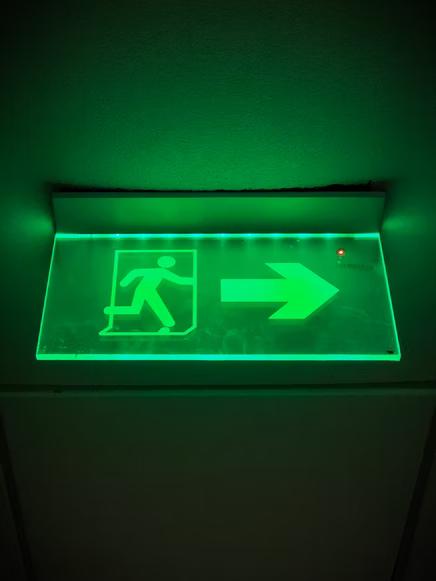
Where Should Emergency Lighting and Exit Signs be Installed?

One thing that we have noticed about most people, be it at homes or large corporate setups, the importance of safety equipment and devices is highly underrated. However, paying extra attention when it comes to security should be our primary concern. In case of a fire, an earthquake or any other disaster, these safety devices will be our ultimate guide.

When it comes to safety devices, emergency lighting and safety signs should definitely be on the top of the list. While evacuating a building during a major crisis, these are the only ways to avoid blocking the hallways and move in the right direction without causing much commotion and panic.

Emergency lightings are made up of reflective material that is not dependent on the power supply of the building. This means that these signs and signals would work efficiently even if there is a power shortage in the entire building! If you are looking for emergency exit lights in Dubai, UAE, we have just the right solution for you!

Emergency exit lights in Dubai, UAE

Where should you install an emergency sign?

As we have already mentioned, emergency lights and exit signs are highly crucial and should be integrated within a building’s plan. Let us take a detailed look at where you must prioritize the installation of an emergency sign!

Keep reading to find out!

  • Emergency lighting should be present in all hallways, corridors as well as staircases so that people can easily find their way towards the exit.
  • These safety devices should be present in all types of commercial buildings such as schools, colleges, theaters, libraries, hospitals, etc.
  • All small space rooms with no windows such as bathrooms, elevator shafts, and storage rooms must have emergency lighting. People can accidentally be stuck in those rooms as well.
  • Emergency lights should be evenly spaced in such a way that no area is excessively light or excessively dark.
  • Along with the location, the angle at which the lights are fixed plays a crucial role as well. If the emergency lights are not fixed at appropriate angles, the lighting fixtures do not comply with emergency guidelines.
  • There should be appropriate lighting to mark any changes in direction or turns in the hallways.
  • The proper lighting should be present near high voltage devices such as a generator so that there are minimal chances of accidents and death.

Where should you install exit signs?

Exit lights should also be installed in such a way that people can easily locate them from afar. Certain codes must be followed while installing exit signs.

  • An exit sign should be marked on every hallway which leads towards the main exits of the building.
  • An exit sign should be properly illuminated, made up with reflective materials which are easily visible from a distance.
  • Exit signs should be properly backed up by a battery source so that the signs work even in case of a power outage.
  • The path to the exit should not be obstructed by any material, be it desks, devices or cleaning equipment. A clear passage must be maintained at all times.
  • Proper directions to the exit must be provided on all floors of a building so that people can safely find the main entrance and there are no cases of a stampede.
  • Doors that do not lead to the main entrance should be marked as “No Exit”. This helps to avoid confusion and commotion when an accident occurs.
Emergency exit lights in Dubai, UAE

Emergency exit lights in Dubai, UAE

If you’re looking for safety devices like emergency exit lights in Dubai, UAE, Resco should be your number one choice. A global engineering solution dedicated to providing world-class safety devices and security solutions in Dubai and the rest of the UAE.

With over a decade of experience in bringing premium quality products into the market, the base of our business is built on customer satisfaction. We understand the importance of human lives, especially in a crisis. This is exactly why our products are backed by a customer service team, available round the clock to assist our customers.

Not only that, our team of highly expert professionals has put in their practical knowledge combined with modern technology to come up with the best quality fire protection and safety devices in all of Dubai. Check out our website to get personalized offerings on the pieces of equipment of your choice!

Founded in the year of 2009, RESCO electro mechanical LLC is involves for all the electro mechanical work installation services especially in the life safety and security systems design engineering, supply and installation, test and commission the complete system as per the client requirements.

Al Kalbani building M08-19, Mezz. Floor Al Khabaisi. Dubai, UAE